 Cockroaches
 Rats
 Mice
 Bed Bugs
 Ants
 Wasps
 Spiders
 Field Mice
How to get rid of cockroaches: the 6-step method
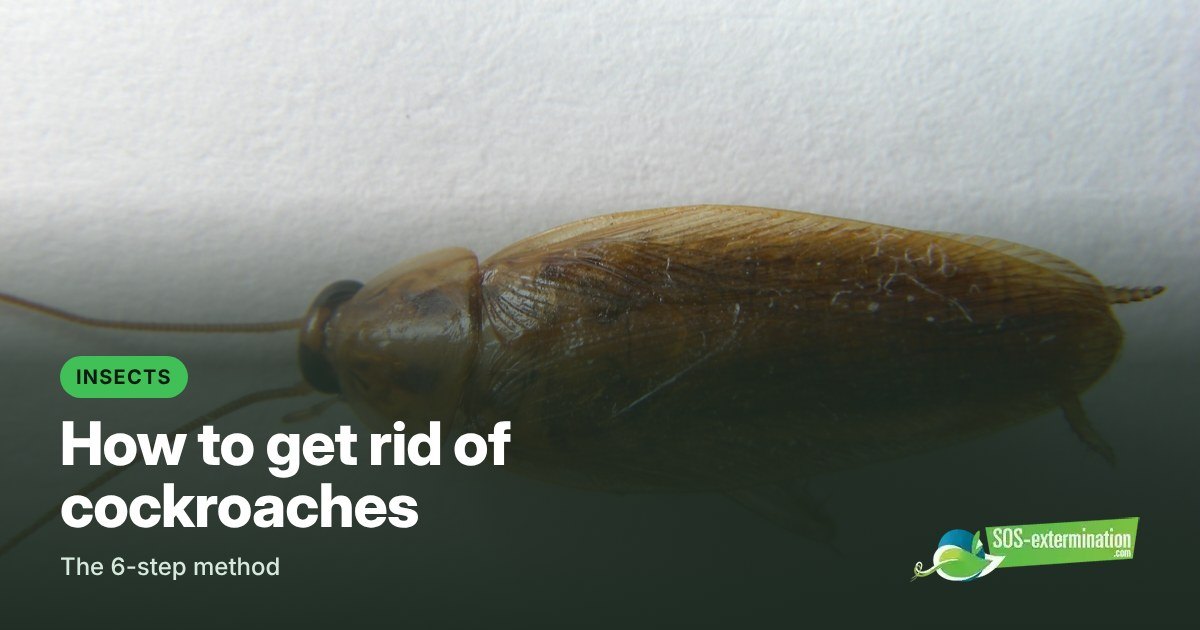
To get rid of cockroaches, combine cleaning that cuts off their water and food, baits placed near their hiding spots and sealing of cracks, then monitor the results with sticky traps for several weeks.
Why do cockroaches so often come back after a rushed treatment?
In this guide, you’ll learn:
- how to recognize the German cockroach, one of the most common species in homes;
- the 6-step method to eliminate cockroaches, from cleaning to follow-up;
- which cockroach products are allowed in Canada, in Quebec and in Montreal;
- who has to call the exterminator when you are a tenant.
Identify the cockroaches before treating
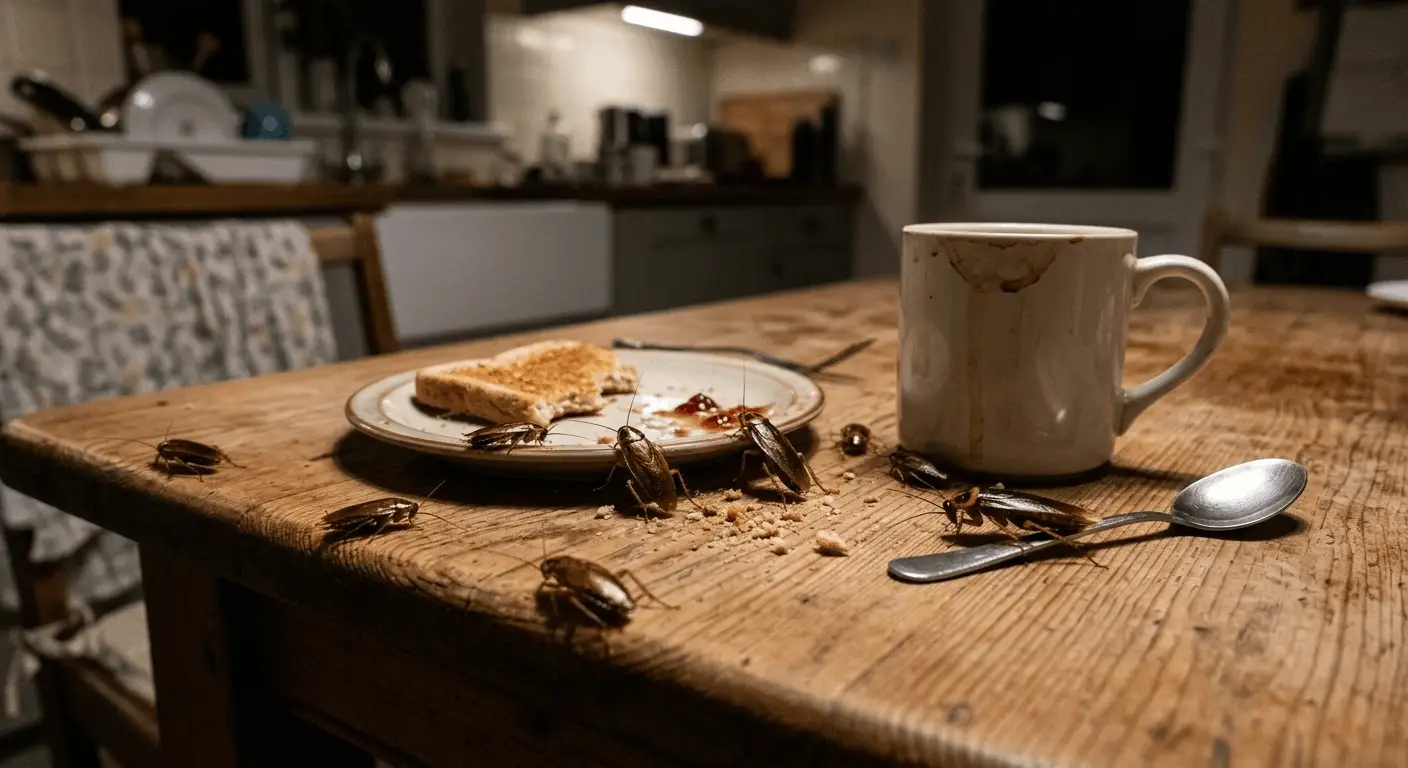
Cockroach and roach name the same insect. According to Health Canada, the German cockroach measures about 1.3 to 1.6 cm and has two dark parallel streaks running from the head to the base of the wings. It is tan to light brown. It has wings but cannot fly and comes out mostly at night, so an infestation can go unnoticed for a while. It is one of the most common species in homes, where it looks for the warmth and moisture of kitchens and bathrooms.
A much larger cockroach, seen in the basement or near the plumbing, is more likely an American cockroach, a species that is hard to eliminate. The species matters, because it decides where the baits go. Also confirm the signs of activity: droppings that look like ground pepper, egg cases (oothecae), shed skins and an oily smell. Our article on the signs of a cockroach infestation describes them in detail. If in doubt, an exterminator in Montreal can confirm the species and the extent of the infestation.
Get rid of cockroaches in 6 steps
Health Canada is clear: against cockroaches, intensive cleaning and pesticides should be used together, because the living environment has to change first. The six steps follow that order: cut off food, remove what is already there, locate hiding spots, treat, close off access, then check.
Step 1: cut off the cockroaches’ food
A cockroach lives where it finds food, water and shelter. Store food, cereal and pet food in airtight plastic or glass containers rather than in cardboard. Empty the garbage every day into a closed bin. Soak dishes in soapy water if you are not washing them the same evening.
Then repair leaking faucets and pipes. Insulate pipes that sweat and ventilate the bathroom. A dehumidifier dries out the basement. Finally, clean under and behind the refrigerator and the stove, where crumbs and grease build up.
Step 2: vacuum and freeze the cockroaches
Vacuum the corners, cracks and the space behind appliances to remove the insects, their eggs and crumbs. Health Canada advises placing the vacuum bag in soapy water afterwards. Furniture, toys and items that can handle heat and moisture can be steam cleaned. Others can be frozen at -8°C for at least 24 hours, preferably up to a week, in a closed bag. Wear gloves to pick up dead insects, then disinfect the counters and surfaces they walked on.
Step 3: find where the cockroaches hide
Set sticky traps along the baseboards, under the sink, next to the refrigerator and in the cupboards. After a few nights, the traps with the most catches show where the roaches hide. That is where baits will work best. Note the location and number of catches: this record is your point of comparison in step 6.
Step 4: set cockroach baits
To kill cockroaches right in their hiding spots, a bait combines a slow-acting insecticide with a food attractant. The cockroach eats it, then goes back to its hiding spot. According to the University of Kentucky entomology fact sheet, other cockroaches can then ingest traces of the product passed in its droppings. According to Health Canada, bait stations sold in tamper-proof containers kill the insect about 48 to 96 hours after the active ingredient is ingested.
Apply the gel in small dots in the cracks and corners found in step 3, or place the stations against the baseboards, out of reach of children and pets. Replace the bait once it has been eaten, following the label directions.
Step 5: close off cockroach access
Once activity drops, seal and caulk cracks, crevices and openings around pipes: every joint you close is one less hiding spot. Put fine mesh screens on vents, drains and open pipes. In a plex or an apartment building, watch the plumbing chases and shared walls, which the insects use to move from one unit to another. Also inspect cardboard boxes, used furniture and empty bottles before bringing them in: cockroaches and egg cases travel in them.
Step 6: watch for cockroaches coming back
Put sticky traps back in the same spots as in step 3 and compare the catches from week to week. Nymphs that show up after the treatment often hatch from egg cases already laid: each one can release up to 40 nymphs, according to the University of Kentucky. This follow-up lets you add bait before the population bounces back. Cockroaches seen during the day or catches that do not go down point to a well-established infestation.
Which cockroach products to use in Canada
Every pesticide sold in Canada must be registered by Health Canada under the Pest Control Products Act. The assessment is done by the Pesticides Regulatory Directorate, formerly the Pest Management Regulatory Agency (PMRA).
The PCP number on the label
Before buying, look for the Pest Control Products (PCP) number on the label: it shows that Health Canada has assessed the product. Then read the whole label to check that the product targets cockroaches indoors, and follow the doses and warnings. Health Canada’s Pesticide Label Search tool finds the official label from the number, the product name or the active ingredient.
Baits, residual products and diatomaceous earth
Health Canada describes four types of cockroach products. Residual crack and crevice products stay active after the treatment. Bait stations kill after ingestion. Aerosols and space sprays, which work on contact, are mostly used for heavy infestations. Diatomaceous earth (silicon dioxide) scratches the insect’s outer shell and kills it through dehydration: it stays active as long as it is dry, but avoid breathing in the dust while applying it. A product made with pyrethrins or boric acid follows the same rule: a PCP number on the label.
Foggers and unregistered insecticides to avoid
Foggers (bug bombs) do a poor job of reaching hiding spots. According to the University of Kentucky, their ingredients also tend to repel the insects, which scatter. In Quebec, pest control companies are in fact prohibited from using a fogger inside a home. Also avoid imported products with no PCP number, such as the dichlorvos products shown in a Health Canada warning: it is illegal to import, sell and use an unregistered insecticide. Montreal’s regional public health department also advises tenants to go through their landlord rather than apply an over-the-counter chemical product themselves.
Cockroach pesticides: Quebec and Montreal rules
Two layers of rules come on top of federal registration: Quebec’s Pesticides Management Code and, on the island, the City of Montréal’s by-law.
The Pesticides Management Code since 2025
Since July 6, 2025, Quebec’s Pesticides Management Code has banned the application of pesticides containing dichlorvos or propoxur inside buildings used as dwellings (in French). Retailers can no longer sell the products concerned. Traps, stations and containers holding an active ingredient in solid form are still allowed if they prevent any contact with a person or a non-target animal. The pest control company must hold a C5 or D5 permit. Each technician holds a CD5 certificate or works under the supervision of a certificate holder. After an application in a home, the company must also inform the occupants with a written notice. According to the Ministry of the Environment, pyrethrins, permethrin and cyfluthrin remain authorized for pest control in homes, including against cockroaches.
City of Montréal By-law 21-041
In Montreal, the By-law concerning the sale and use of pesticides (21-041) has banned 33 molecules since January 1, 2022, including ten insecticides such as imidacloprid, acetamiprid and thiamethoxam. A resident who uses a product containing them is liable to a fine. The City also prohibits retailers from selling residents products that contain these molecules. The by-law covers the sale of domestic pesticides and their use outside buildings, so read the active ingredient on the label of any bait bought in Montreal.
Cockroaches in an apartment: landlord or tenant?
In Quebec, the Civil Code requires the lessor to deliver a dwelling in good habitable condition and to keep it that way for the entire lease (article 1910). The lessor also delivers it clean. The tenant must then keep it in the same condition (article 1911). In Montreal, the By-law concerning the sanitation, maintenance and safety of dwelling units (03-096) prohibits vermin and insects in a dwelling. When an extermination takes place, occupants must give the exterminator access and prepare the premises if needed.
First notify your landlord by registered mail: this letter serves as proof if you later open a file with the tribunal. Several boroughs ask you to give the landlord 10 business days to act. If nothing happens, request an inspection of your dwelling through 311. The City states that the landlord must call in an exterminator and advises tenants not to try to solve the problem alone. In case of a dispute, the Tribunal administratif du logement can award damages, a rent reduction or an order to carry out the work (article 1863). Our article on extermination responsibility in an apartment building explains who pays for what.
Keep cockroaches from coming back
To keep cockroaches under control once the catches are down to zero, stick with the habits from steps 1 and 5. Leave a few sticky traps under the sink and behind the refrigerator, and check them every week. A single catch justifies new bait. In a building, report any sighting to the landlord or property manager: a unit treated on its own gets reinfested quickly if the neighbour still has a colony.
When to call a cockroach exterminator
Call a professional when catches stall after a few weeks, when cockroaches come out during the day or when the infestation affects several units. SOS Extermination works as a cockroach exterminator in Montreal, on the South Shore and the North Shore, 24 hours a day. Our method follows integrated pest management: our certified technicians inspect the premises, with the thermal camera when the situation calls for it, identify the species and give you a free quote before treating. The products used are registered by Health Canada. For reference, our 2026 exterminator cost guide by pest puts this service between \$250 and \$600, for 2 to 3 gel bait treatments. The conditions of the written guarantee are printed on your invoice.
Cockroaches keep coming back?
A technician inspects, identifies the species and gives you a free quote before any treatment.
FAQ: how to get rid of cockroaches
How long does it take to get rid of cockroaches?
With baits, the first cockroaches die within days: Health Canada mentions about 48 to 96 hours after ingestion. Complete elimination takes longer, because egg cases already laid hatch after the treatment. Plan on several weeks of follow-up with sticky traps. For cockroach extermination, the SOS Extermination price guide plans, for reference, 2 to 3 gel bait treatments.
Do natural cockroach remedies work?
Among the so-called natural solutions, diatomaceous earth is the only one Health Canada lists among cockroach products: it dehydrates the insect as long as it stays dry. Essential oils, lemon and vinegar are not in its advice. Cleaning, vacuuming, steam and freezing remain the best-documented methods without pesticides. Against an established infestation, they complement baits without replacing them.
Do cockroaches bite or sting?
Cockroaches do not sting and very rarely bite people. The real risk lies elsewhere: according to Health Canada, cockroaches can contaminate food and spread disease after crawling through garbage or sewers. Their droppings and body parts can also trigger allergies and reactions in people with asthma. Our article on cockroach diseases in Montreal covers these risks in detail.
Can you use a bug bomb on cockroaches?
It is not recommended. Foggers (bug bombs) do a poor job of reaching the cracks where cockroaches hide. According to the University of Kentucky, their ingredients even tend to repel and scatter them. In Quebec, pest control companies are prohibited from using them inside a home. Gel baits or bait stations, placed near the hiding spots found with sticky traps, give better results.
Who pays for the cockroach exterminator when you rent?
In Montreal, the City states that the landlord must call in an exterminator when a dwelling has insects. The Civil Code of Québec requires the landlord to keep the dwelling in good habitable condition for the entire lease. The tenant, for their part, keeps the dwelling clean, notifies the landlord in writing and prepares the premises before the treatment. In case of disagreement, the Tribunal administratif du logement decides.
Are cockroaches a sign of an unclean home?
Not necessarily, according to Health Canada. Cockroaches look for the warmth and moisture of kitchens, bathrooms, basements and plumbing. They also come in with used furniture, groceries, empty bottles or cardboard boxes. In a building, they move from one unit to another through the plumbing and shared walls. A clean home still limits their food and makes treatment easier.
Which cockroach products are banned in Montreal?
Since January 1, 2022, the City’s By-law 21-041 has banned 33 molecules, including ten insecticides such as imidacloprid, carbaryl and malathion. Across Quebec, pesticides containing dichlorvos or propoxur have been banned inside homes since July 6, 2025. Before buying a bait, read the active ingredient and the PCP number on the label.
How much does a cockroach exterminator cost in Montreal?
For reference, our 2026 price guide puts cockroach extermination between \$250 and \$600, for 2 to 3 gel bait treatments. The price depends on the pest, the severity of the infestation, the area and the type of building. The online calculator gives a fixed price in about 60 seconds. The quote is always free.
A fixed price for your cockroaches, online
The online calculator gives you a fixed price in about 60 seconds, with no sign-up and no commitment.
Certified exterminators in Montreal for over 30 years. Written warranty on the invoice, thermal camera included, Health Canada-approved products.