 Cockroaches
 Rats
Rats Mice
Mice Bed Bugs
 Ants
Ants Wasps
Wasps Spiders
 Field Mice
Cockroach infestation: signs, risks and solutions
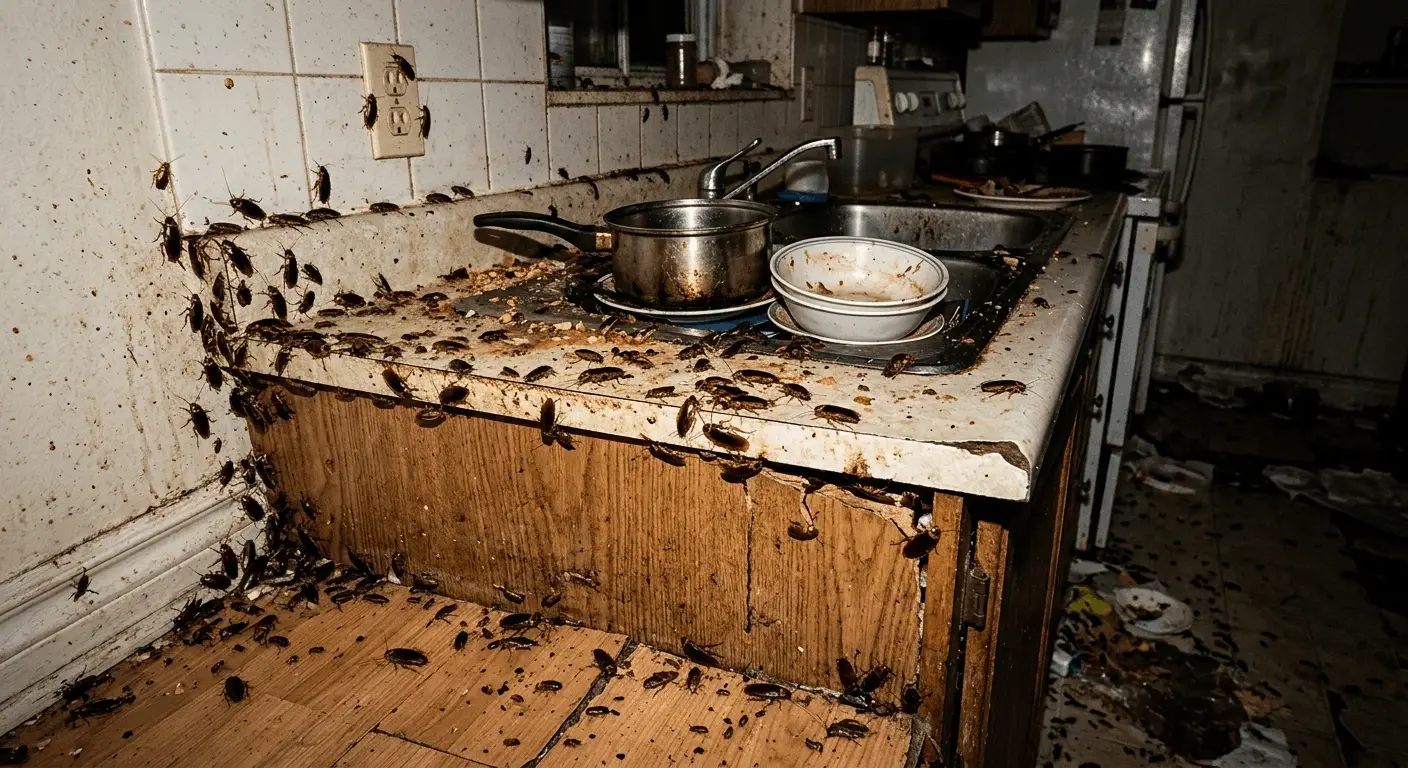
Finding a crawling insect in your kitchen in the middle of the night usually sends a shiver of disgust down your spine. Cockroaches, also called roaches, are among the pests most dreaded by homeowners and tenants alike. A cockroach infestation is not only unpleasant to look at, it also represents a serious threat to the cleanliness of your environment and to your family’s health.
These nocturnal insects are particularly problematic in homes and businesses because of their incredible ability to survive and reproduce. A single female can produce hundreds of offspring in just a few months, turning a simple intrusion into a sanitary nightmare. They slip into the smallest cracks, contaminate your food supplies and can damage your belongings.
To protect your living or working space, it is essential to understand how these pests behave. This article will help you identify the most common species, spot the first signs of an infestation, assess the health risks and discover the most effective methods to get rid of them for good.
The most common types of cockroaches
There are thousands of cockroach species around the world, but only a handful tend to invade our buildings. Knowing which species you are dealing with makes it possible to adapt the treatment method.
The German cockroach
This is the most widespread species in residential and commercial areas. It stands out for its light brown colour and the two parallel dark stripes on its back, just behind its head. Highly prolific, it is especially fond of warm, humid places such as kitchens and bathrooms.
The American cockroach
Larger than its German cousin, the American cockroach can measure up to four centimetres long. It has a reddish-brown colour and moves extremely fast. Although it can fly short distances, it prefers to run. It is often found in basements, boiler rooms and sewers.
The Oriental cockroach
Often called a “water bug”, this species has a sturdy, flat body that is very dark brown, almost black. Oriental cockroaches like very damp, cool environments. They frequently settle near pipes, in cellars or under leaking sinks.
The brown-banded cockroach
Smaller in size, this species is recognizable by the light crosswise bands on its wings and abdomen. Unlike other types of cockroaches, it prefers dry and very warm places. It is not unusual to find nests behind picture frames, in the ceiling or inside electronic devices.
How to detect a cockroach infestation
Cockroaches are experts at hiding. They avoid light and stay out of sight during the day. Even so, they leave several telltale clues behind them.
The presence of droppings
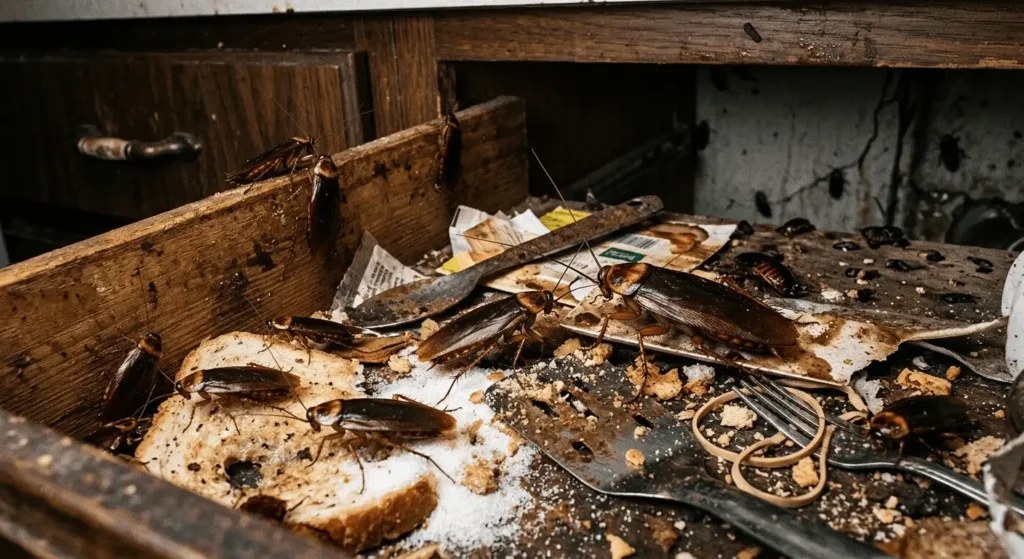
Cockroach droppings often look like small grains of black pepper or coffee grounds. You may notice them in drawers, along baseboards or inside your kitchen cabinets.
Oothecae (egg capsules)
Females lay their eggs in protective capsules called oothecae. These small, oval, brownish cases measure about 8 millimetres. Finding them empty means a new generation has already hatched in your home.
A foul odour
A large infestation gives off a very distinct smell. Cockroaches secrete pheromones that release a musty, oily or musky scent. This lingering odour often works its way into cupboards and food storage areas.
Nighttime sightings
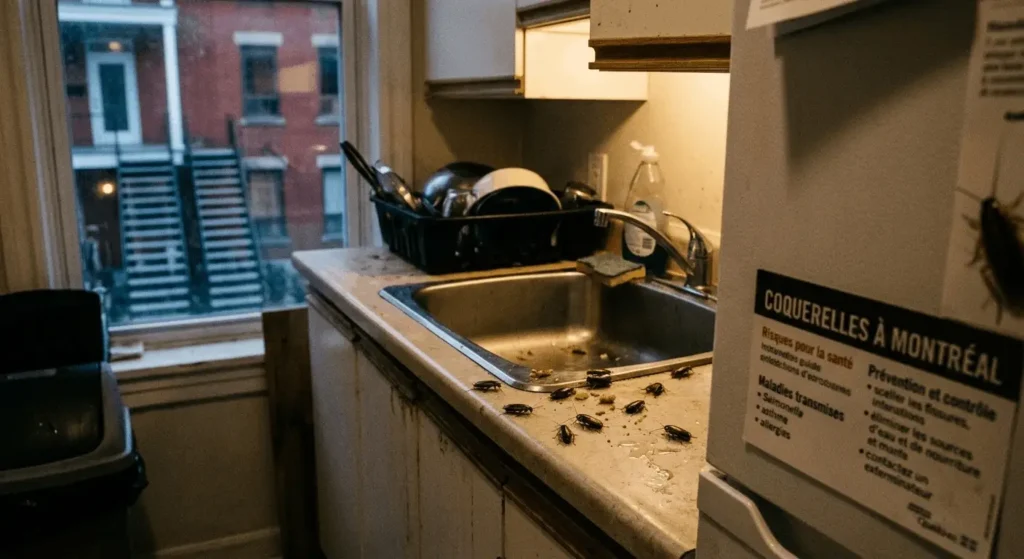
If you suddenly turn on the kitchen light in the middle of the night and see insects scurrying under the furniture, the infestation is probably already well established. Seeing cockroaches in broad daylight is an even more worrying sign, because it means their nests are overcrowded.
The risks to human health
Having cockroaches under your roof is not just a cosmetic problem. These insects are a genuine health hazard.
Allergy and asthma triggers
Cockroaches shed their skin as they grow and leave droppings just about everywhere. These residues turn into dust and contain powerful allergens. Breathing in these particles often causes asthma attacks, eczema and severe respiratory problems, especially in young children.
Spreading bacteria and pathogens
As they crawl through sewers, garbage and unsanitary areas, cockroaches pick up dangerous micro-organisms on their legs and bodies. They carry and transmit serious illnesses, including salmonellosis, gastroenteritis and E. coli infections.
Contamination of food supplies
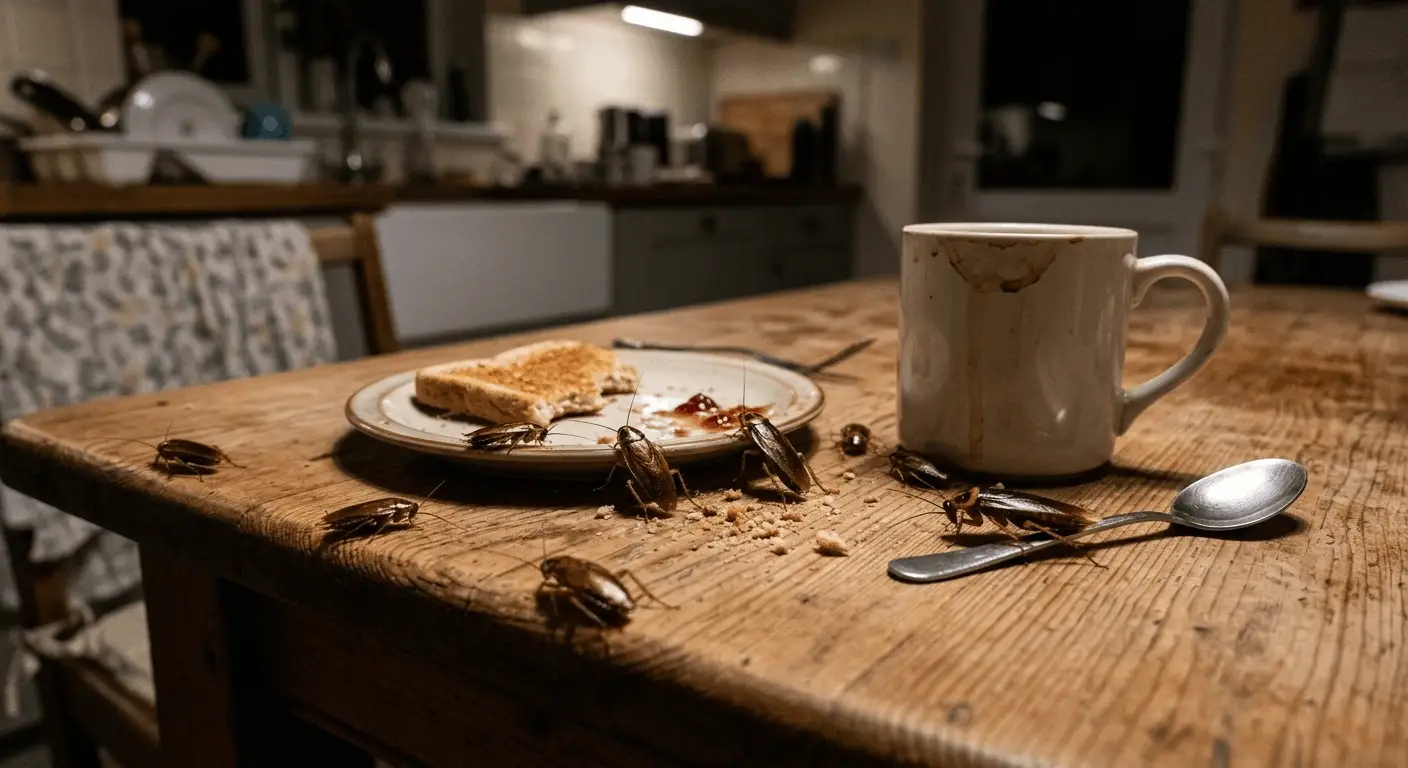
Cockroaches are omnivores and will go after anything in your pantry. When they nibble on your food, they leave saliva and droppings behind. Any food that has come into contact with these pests must be thrown out immediately to avoid food poisoning.
Where do cockroaches get in?
Understanding how these insects make their way into your home is the first step to blocking them.
Cracks and crevices
The flat body of a cockroach lets it squeeze through tiny openings. A slightly cracked foundation or a gap under a door is enough to let them in.
Ventilation ducts and plumbing
Shared walls and plumbing systems act like highways for cockroaches, especially in multi-unit apartment buildings. They travel easily from one apartment to another through the pipes.
Used furniture and appliances
Buying a second-hand refrigerator or a used couch carries risks. Cockroaches love to nest in appliance insulation or in the seams of furniture.
Grocery bags and packaging
You can accidentally bring cockroaches or their eggs home with you after grocery shopping. Corrugated cardboard boxes are a particularly popular shelter for these insects during transport.
Effective prevention strategies
The best defence against a cockroach invasion is still active prevention. A few simple habits can make your home inhospitable to these pests.
Keep spotless hygiene
Regular cleaning is your main weapon. Wipe up crumbs right away, mop the floors, don’t let dirty dishes pile up in the sink and empty your garbage every day.
Store food properly
Seal all your food airtight. Use glass or rigid plastic containers to store flour, cereal and sugar. Don’t forget your pets’ food: put it away as soon as they have finished eating.
Seal entry points
Inspect your walls, baseboards and windows. Use caulking to fill cracks and install screens over your air vents. Also repair any damaged window screens.
Reduce indoor humidity
Cockroaches have a vital need for water. Repair leaky faucets, insulate pipes that build up condensation and use a dehumidifier in especially damp rooms such as the basement.
Do-it-yourself control methods (and their limits)
At the first signs, many people try to solve the problem themselves. While some methods offer temporary relief, they quickly reach their limits.
Baits and traps
Sticky traps help identify the areas cockroaches travel through, while poisoned baits kill the ones that eat them. However, these tools do not reach the nests hidden deep inside your walls.
Insecticide sprays
Aerosol products sold in hardware stores kill insects on contact. The problem is that they often drive the survivors to hide even deeper in the building structure, which scatters the infestation.
Natural solutions
Boric acid and diatomaceous earth are powders that damage the exoskeleton of insects. Although they are less toxic to humans, they have to be applied extremely precisely to be effective, and they are not enough to wipe out an entire colony.
Knowing when to call pest management experts
Given how remarkably resilient cockroaches are, do-it-yourself solutions frequently fail. Using chemical products improperly can even make the situation worse or put your health at risk.
Pest management professionals have the knowledge, the equipment and the certified products needed to eliminate the problem at its source. If you live in the Montreal area and the situation has become overwhelming, calling a Cockroach Exterminator in Montreal is the safest and fastest decision. Experts use modern technology, such as thermal cameras, to locate nests hidden behind walls or under floors.
The professional extermination process
Hiring a specialist guarantees you a methodical and permanent approach. Here is what happens when you call in a qualified technician.
The thorough inspection
The exterminator starts by assessing the scale of the infestation. They identify the exact cockroach species, locate the main nests and determine the entry points as well as the food sources.
The custom treatment plan
Based on the diagnosis, the professional applies a targeted treatment. This can include commercial-grade bait gels, residual treatments applied strategically in cracks, or insecticide dusts in structural voids.
Follow-up and prevention advice
A good extermination company does not stop at the initial treatment. It schedules follow-up visits to make sure the colony has been completely eliminated, including any eggs that may have hatched in the meantime. The technician will also give you personalized recommendations to prevent any recurrence.
Get back to a healthy, pest-free environment
Cockroaches are far more than a simple eyesore. Their fast adaptability and the diseases they carry call for an immediate reaction as soon as you spot the first one. By keeping your home clean, dry and well sealed, you considerably reduce the risk of an invasion.
If these pests still manage to settle in despite your precautions, don’t waste time on temporary remedies. Trust qualified professionals to protect your health and your home, eradicate the problem at the root and give you back your peace of mind.
Certified exterminators in Montreal for over 30 years. Written warranty on the invoice, thermal camera included, Health Canada-approved products.