 Cockroaches
 Rats
 Mice
 Bed Bugs
 Ants
 Wasps
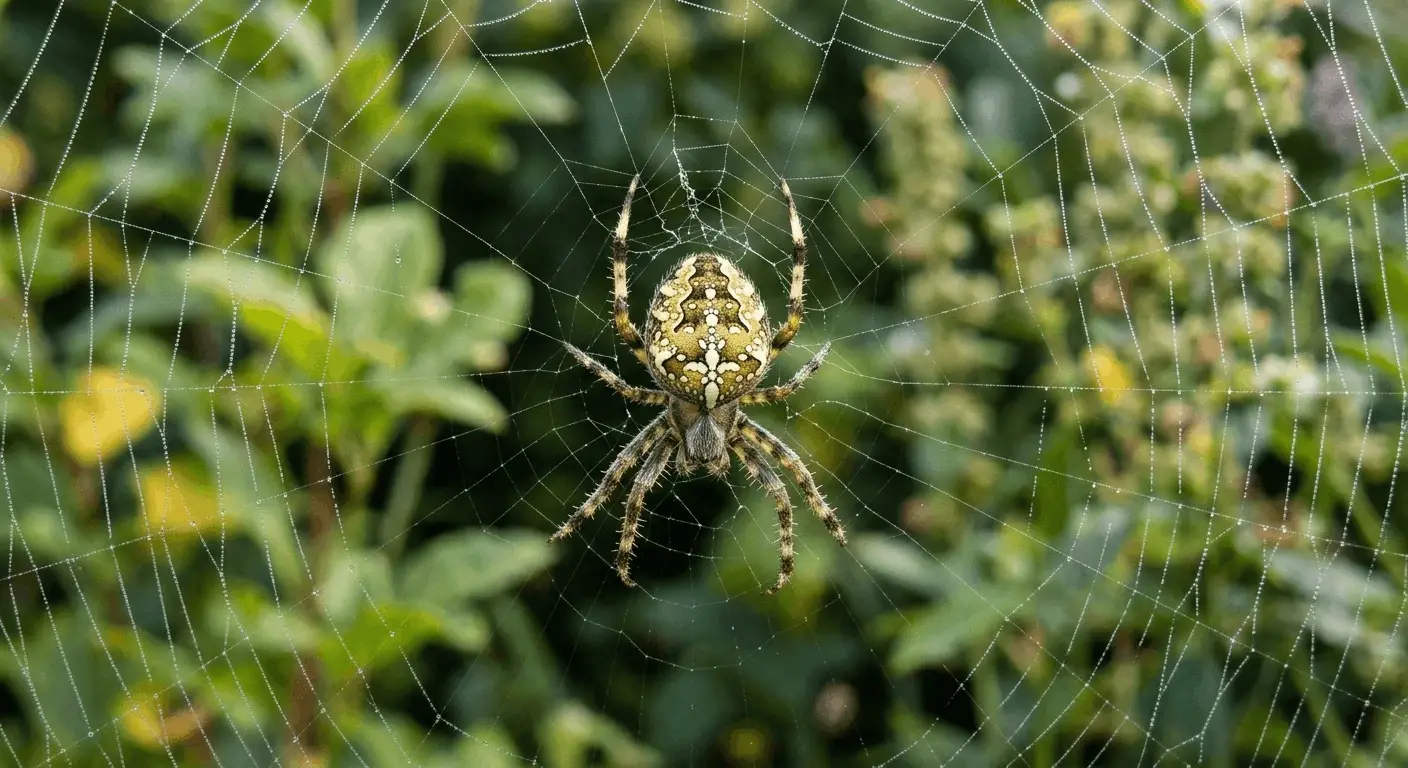 Spiders
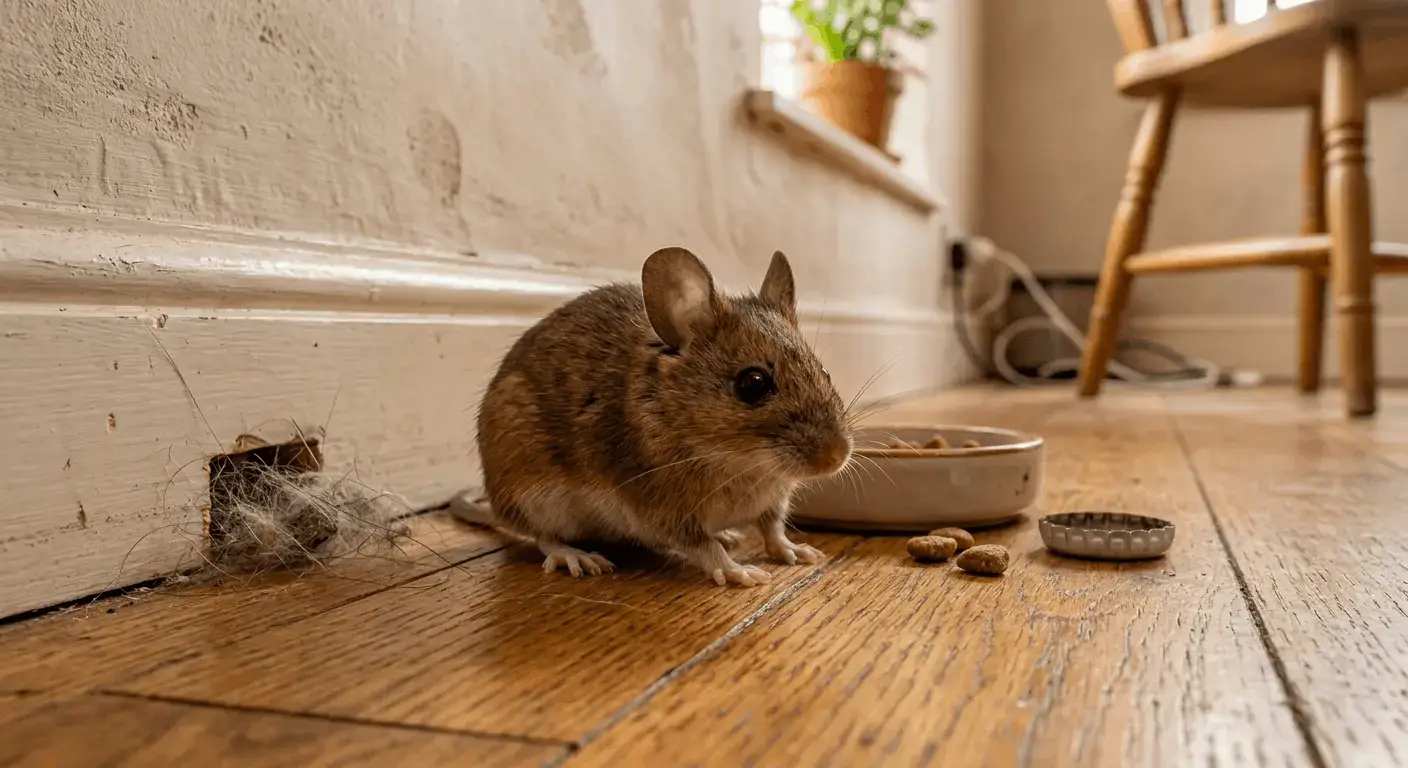 Field Mice
How to get rid of a skunk: prevention, removal and Quebec rules
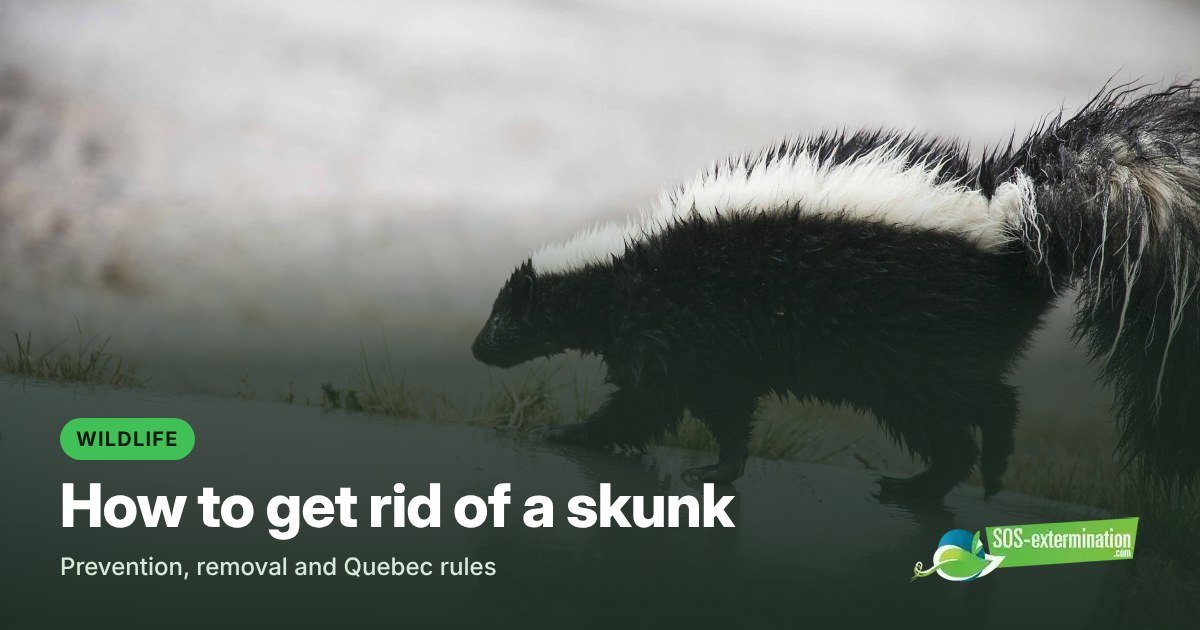
To get rid of a skunk, remove what attracts it, wait for it to leave its den at night, then block the access with buried wire mesh: Quebec law favours these steps before any capture.
How do you get a skunk out from under your deck without getting sprayed or breaking the wildlife rules?
In this guide, you’ll learn:
- why a skunk settles on your property and how to keep it away;
- how to get it out from under a deck, a shed or a window well;
- what the law allows when it comes to capture and relocation;
- what to do about rabies and skunk smell.
The striped skunk, a protected wild animal
The striped skunk (Mephitis mephitis) is an omnivorous mammal that is common in Quebec. According to the Government of Québec’s striped skunk fact sheet (in French), it measures 54 to 77.5 cm including the tail and weighs 1 to 6.3 kg. Its black fur has two white stripes along the back. It is active at night, rests in its den during the day and is a poor climber: it lives on the ground, under decks, balconies and sheds.
As a wild animal, it falls under the Act respecting the conservation and development of wildlife. It is therefore covered by the wildlife rules of Quebec’s Ministry of the Environment (MELCCFP), not by the mouse, rat or cockroach treatments an exterminator in Montreal provides.
Mouffette or moufette: the French spelling
In French, the Office québécois de la langue française accepts both spellings. “Mouffette” is the traditional spelling, used by the Government of Québec. “Moufette”, with a single f, is the revised spelling used by the City of Montréal. You will see both on official pages in French.
Why a skunk settles on your property
A skunk moves in for two reasons: easy food at night and a shelter close to the ground. Take both away, and the skunk will go elsewhere.
Grubs: what the skunk is after
Skunks feed on insect larvae hidden under the lawn, including white grubs. Small cone-shaped holes in the grass in the morning often give away a visit. They also eat insects, eggs, amphibians, small mammals and berries.
Garbage that attracts skunks
A garbage bag put out the night before collection, a bin without a lid or the cat’s food bowl on the balcony is enough to attract a skunk. Fallen fruit and an open compost complete the menu.
A den for the skunk under the deck
For its den, it looks for a dark space under a deck, a porch, a patio or a shed. Mating takes place mostly in March. The young are born in May (five or six per litter on average) and start coming out in early July. In spring, a female may therefore be using a den under a deck with her young.
Keeping a skunk away from your yard
To keep skunks away, deal with food first, then access to the ground. The goal is to live alongside it without inviting it in: a skunk passing through moves on if it finds neither food nor shelter.
Garbage and food out of skunks’ reach
Store bags in a sturdy bin with a tight-fitting lid or in a wooden box with a hinged lid. Put your garbage out on the morning of collection rather than the night before, since skunks are nocturnal. Bring pet food in before dark, pick up fallen fruit and harvest the vegetable garden early. In Montreal, the City also forbids feeding wild animals. These habits keep rodents away too: our rat exterminator page lists poorly closed garbage among their main attractions.
Treating the lawn for grubs
Fewer larvae under the lawn means fewer holes. Nematodes, microscopic worms that parasitize white grubs, are a biological option sold at garden centres.
Skunk repellents, lighting and sprinklers
Commercial repellents exist, some of them made with hot pepper (capsaicin). According to Québec.ca, they are often of limited effectiveness and can be fairly expensive. Outdoor lighting or a motion-activated sprinkler can disturb a nocturnal animal. Wire mesh remains the measure that lasts.
Fencing the vegetable garden against skunks
For the vegetable garden, choose metal mesh with openings of 5 cm (2 in) or less. Bury the bottom at least 25 to 30 cm (10 to 12 in) deep, ideally 45 to 60 cm (18 to 24 in), and bend the extra outward in an “L” shape. The L-shaped edge keeps the skunk from digging under the fence.
Getting a skunk out from under the deck
The official method comes down to one idea: leave a single exit, wait for the skunk to leave on its own at night, then close it off, without getting sprayed. From mid-May to early July, a female may have her young in the den: Québec.ca asks you to wait until the young have left before blocking every access.
Block every den opening but one
Walk around the deck, shed or patio and locate every opening of the den. Block them all with wire, sheet metal or cement, except the main one. Do this work during the day, while the skunk is sleeping.
The flour test at the exit
Sprinkle a layer of flour on the ground in front of the remaining opening. The next morning, footprints leading away from the den show that the skunk has gone out. An over-the-counter repellent placed in this last opening, on rags for example, can encourage it to leave. A light aimed at the entrance or a radio playing near the hole can also make the den less peaceful.
L-shaped mesh against a new skunk
Once the skunk has left, close the last opening of the den. To protect the space under the deck, balcony or porch for good, install wire mesh with 5 cm (2 in) openings, buried about 15 cm (6 in) deep and bent outward in an “L” over 40 to 50 cm (16 to 20 in). The principle is the same as sealing mouse entry points.
A skunk stuck in a window well
Skunks are poor climbers: at night, while looking for food, one can fall into a basement window well and get stuck. Gently place a sloped board with cleats every 15 cm (6 in). Let it climb out on its own at night, then cover the window well with metal grating.
Trapping a skunk: what Quebec law says
Section 67 of the Act respecting the conservation and development of wildlife allows you to capture, move or kill an animal that is damaging your property, only if you cannot scare it away or otherwise prevent the damage. Section 68 covers what comes next: an unharmed animal is released or dealt with according to the regulation. An injured or dead animal is reported to a wildlife protection officer. For a captured skunk, Québec.ca provides two options: release it on site (outside a building) or kill it as a last resort.
The City of Montréal, on the other hand, states that capturing, relocating or killing wild animals is prohibited, since they are protected by that same Act. The two sources do not match. In Montreal, stick to prevention and exclusion. Ask your questions on the government’s wildlife line. Québec.ca keeps poisoning as a last resort, with authorized products: this guide does not cover it.
Relocating a skunk: 75 km and rabies
Relocating a skunk is strongly discouraged: every move risks spreading disease. Another skunk will also take its place if the den stays accessible. It is prohibited to move it more than 75 km from where it was captured, or from the south shore to the north shore of the St. Lawrence River. Around raccoon rabies cases, moving a live striped skunk is prohibited in the designated municipalities of Estrie, Montérégie and Centre-du-Québec, including Longueuil, Brossard and Boucherville. This ban is in force until December 6, 2026, and could be extended.
A certified trapper to capture a skunk
Québec.ca considers trapping a skunk tricky and strongly recommends a certified, experienced trapper, with a trap authorized for the species. It also suggests the trappers’ association in your region. A firearm is considered ineffective and dangerous at night.
Skunks and rabies: what to do
The striped skunk can carry rabies and canine distemper. According to the INSPQ, rabies spreads mainly through the saliva of an infected mammal (in French), by a bite or a scratch. It is usually fatal once symptoms appear. Be wary of a skunk acting strangely or aggressively and do not let it come near you. Keep your distance and keep your dog on a leash.
Raccoon rabies reappeared in Quebec in December 2024, mostly in Montérégie, where a third outbreak was detected in June 2026. The raccoon rabies surveillance operations target raccoons, skunks and foxes in Estrie, Montérégie and Centre-du-Québec, with vaccine baits dropped in April, then in August and September 2026.
Bite, scratch or contact with saliva
Clean the wound with soap and water for 10 to 15 minutes, even if it is minor, then call Info-Santé 811. If your pet was bitten or touched a skunk, see a veterinarian quickly.
Reporting a sick or dead skunk
Report a sick or dead skunk at 1 877 346-6763 or through the ministry’s online form: it may be collected for rabies testing. Do not touch the carcass with bare hands and keep your pets away. In Montreal, for a dead animal on public property, the City refers residents to Proanima (514 379-2525).
How to get rid of skunk smell
A skunk sprays to defend itself when it feels threatened. Its foul-smelling liquid, sprayed accurately from its anal glands, irritates the eyes. If your dog has been sprayed, wash it outside before bringing it in.
Washing a dog sprayed by a skunk
Penn State Extension suggests an odour-removal solution to mix just before use: 1 quart (0.95 L) of fresh 3% hydrogen peroxide, 1/4 cup (70 g) of baking soda and 1 to 2 teaspoons (5 to 10 ml) of liquid dish soap. Mix in an open container and use right away. Wash the dog with the solution, leave it on for 5 minutes, then rinse. Repeat if needed. Keep the solution away from the animal’s eyes.
Skunk smell on clothing
To fight skunk smell, Québec.ca names bleach or vinegar as the best household substitutes, at one part to ten parts water. On clothing or a surface, test the bleach on a hidden spot first.
When to get help with a skunk
Get help when the skunk comes back despite the mesh, when there are young in the den or when it is acting strangely. For the rules, the Government of Québec’s wildlife line answers at 1 877 346-6763. For a capture, contact a certified trapper or a pest control company that offers wildlife control and knows the relocation rules in your municipality.
The same garbage and the same space under the deck also attract rodents. If small rodents are digging up your yard, see our page on field mouse extermination. For the rest of the house, our pest control articles cover the habits that apply year-round: closed bins, sealed openings and no food left outside.
FAQ: how to get rid of a skunk
What is the best way to get rid of a skunk?
The most lasting way is to remove its food and shelter. Close your garbage bins, bring pet food in and treat the lawn for grubs. Then block every den opening but one, use flour to check that the skunk has gone out at night, and close it off with buried mesh. Trapping rarely solves the problem: another skunk takes its place.
How do I know if a skunk lives under my deck?
Several signs give it away: an opening dug at ground level, freshly turned soil, a musky smell near the deck and small cone-shaped holes in the lawn. Sprinkle flour in front of the opening: footprints in the morning confirm that a nocturnal animal is passing through. Since skunks come out at dusk, watch the entrance from a distance as night falls.
When should you block a skunk den?
Block it only after the young have left, as Québec.ca asks. The young are born in May and start coming out in early July, so avoid closing the den between mid-May and that time. Leave a single exit and use flour to check that the mother and her young have left. Late summer and fall are good times to install the mesh.
Is it dangerous to have a skunk near the house?
A skunk sprays mostly when it feels threatened, so keep your distance. The main risk is rabies, which it can carry. Avoid approaching it, especially if it seems to be acting strangely or aggressively. After a bite, a scratch or contact with its saliva, wash the wound for 10 to 15 minutes and call Info-Santé 811.
Is it legal to kill a skunk in Quebec?
Provincial law allows it only as a last resort, when the skunk is damaging your property and it is impossible to scare it away or stop it. In Montreal, the City states that capturing, relocating or killing wild animals is prohibited. Keeping the skunk away through prevention and exclusion remains the way to go. For any question, call the wildlife line at 1 877 346-6763.
Can you relocate a captured skunk?
It is strongly discouraged and often prohibited. Moving it more than 75 km from where it was captured, or from the south to the north of the St. Lawrence, is prohibited. In the municipalities designated around raccoon rabies cases, including Longueuil, Brossard and Boucherville, moving a live skunk is prohibited until December 6, 2026. The option Québec.ca provides is to release it on site.
Which repellent really keeps skunks away?
Commercial repellents made with hot pepper or capsaicin can bother a skunk, but Québec.ca considers them often of limited effectiveness. Combine them with physical measures: closed bins, pet food brought in, motion-activated lighting or sprinklers. For the deck or shed, metal mesh buried and bent into an L remains the most lasting measure.
Does tomato juice get rid of skunk smell?
Not really. It is a popular remedy, but the Government of Québec considers it of little use. For a dog, a solution of 3% hydrogen peroxide, baking soda and dish soap, mixed just before use, is the recipe suggested by Penn State Extension. Against the smell, Québec.ca names bleach or vinegar, at one part to ten parts water.
Certified exterminators in Montreal for over 30 years. Written warranty on the invoice, thermal camera included, Health Canada-approved products.