 Cockroaches
 Rats
Rats Mice
Mice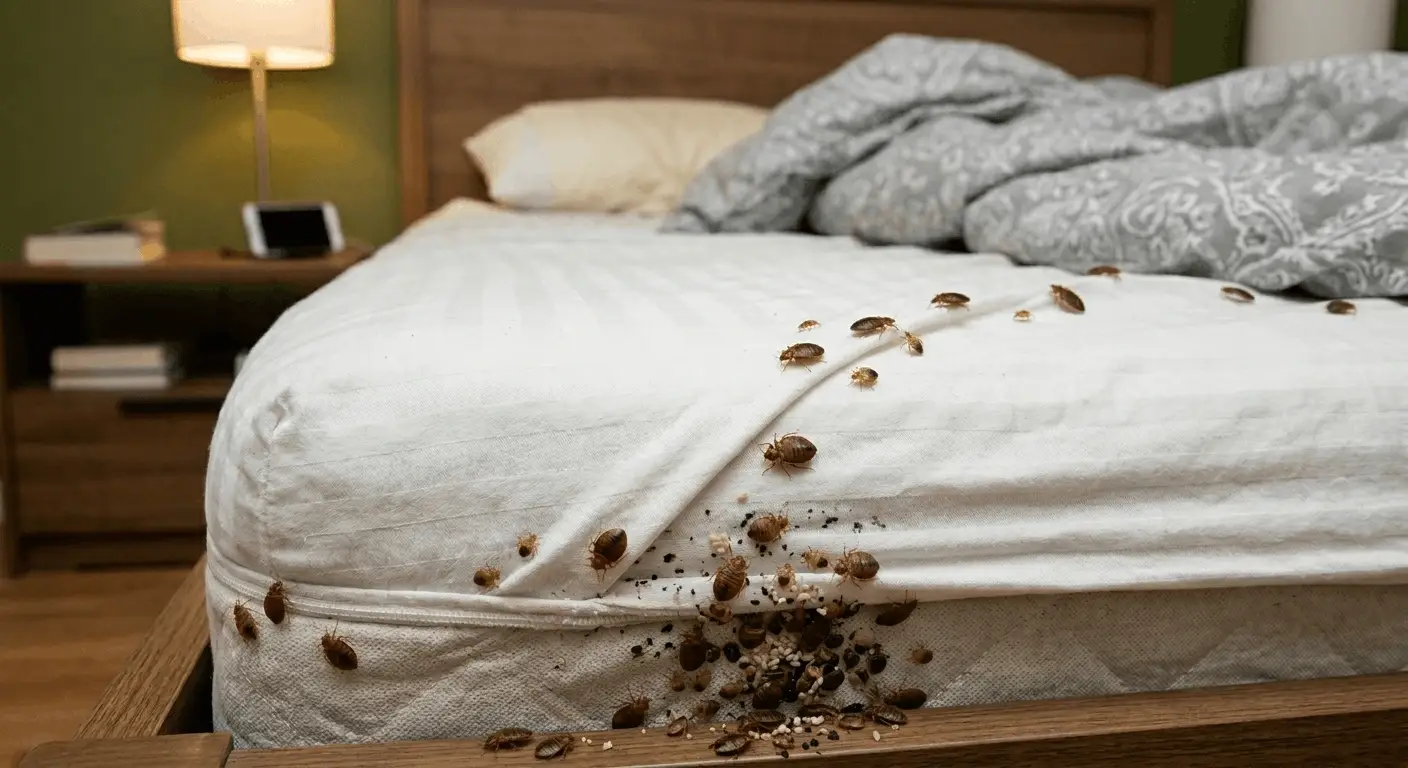 Bed Bugs
 Ants
Ants Wasps
Wasps Spiders
 Field Mice
Bed bug bite: how to recognize it and when to see a doctor
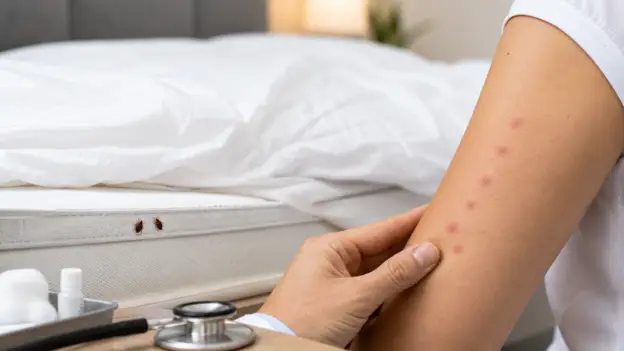
What does a bed bug bite look like?
A bed bug bite looks like a small red bump, slightly raised, that itches. What really sets it apart is how the bumps are organized: they often show up in a line or clustered in the same area, on skin left uncovered during sleep, and you discover them when you wake up.
Taken on its own, a single bite looks like plenty of others, including a mosquito bite. It’s the whole set of clues, the appearance, the pattern, the timing, that lets you identify a bed bug bite with a good level of certainty. This guide helps you see clearly, tell it apart from other household pests in Canada, and know what to do next.
Finding unexplained bites when you wake up is stressful, but it’s very common: you’re neither the first nor the only one, and the situation gets resolved once the source is treated.
How to recognize a bed bug bite
Recognizing a bed bug bite rests on three things: the look of the bump, how it’s arranged on the skin, and the part of the body affected. None of these signs is decisive on its own, but together they sharply reduce the risk of a wrong diagnosis.
The look: a small red bump, sometimes with a central dot
A bed bug bite forms a red papule, round and slightly swollen, sometimes with a darker dot at its centre. The size varies with each person’s sensitivity, from a few millimetres to a larger, inflamed bump in people who react strongly.
The bite is painless at the time, because the insect injects a numbing saliva while it feeds. The itching only comes afterward, often several hours later. That’s why most people never feel the bite and only notice the red bumps in the morning, often 12 to 24 hours after being bitten.
A surprising fact: roughly 20 to 30% of people develop no visible reaction at all, even after repeated bites. So the absence of bumps on one occupant never guarantees the absence of bed bugs in the home.
The pattern: the “rule of three” (in a line, clustered, noticed on waking)
This is the most distinctive sign. Unlike an isolated bite, bed bug bites appear in a line, an arc or a small cluster, usually three to five bumps close together. The insect moves slowly across the skin and bites several times in a row while looking for a blood vessel, which creates that characteristic alignment.
This line pattern is sometimes nicknamed “breakfast, lunch, dinner”: three successive meals for the insect along the same blood vessel. One person can therefore be bitten several times over a single night.
Remember the rule of three: bumps in a line or clustered, noticed on waking, that repeat over several nights. If those three conditions are met, bed bugs become a serious possibility and the home deserves a check.
The parts of the body most often affected
Bed bugs bite the parts of the body left uncovered while you sleep. Depending on your sleeping position, the most frequently affected areas are:
- the arms and shoulders,
- the legs and ankles,
- the back and neck,
- the face, especially in young children.
A useful clue: bed bugs don’t bite through clothing. Bumps that appear only under an area covered all night point to a cause other than a bed bug bite. On darker skin, the redness is sometimes less visible, but the itching is just as present.
Also read: How much does a bed bug exterminator cost in Montreal?
Bed bug bite or mosquito bite?
This is the most common mix-up. Both cause itchy red bumps, but several criteria let you tell them apart reliably, starting with the pattern and the timing. Another clue: a bed bug bite is fairly flat and barely raised, while a mosquito bite forms a more domed bump ringed with a red halo.
Comparison table: bed bug, mosquito and flea
The table below sums up the key differences between the bites most often confused with one another. For another everyday biting insect, see our guide on ant bites as well.
| Criterion | Bed bug | Mosquito | Flea |
| Pattern | In a line or clustered (3 to 5) | Isolated, random | Clustered, in patches |
| Timing | At night, noticed on waking | Evening and night | Day and night |
| Areas | Areas uncovered while sleeping | Anywhere | Ankles, lower legs |
| Pain | Painless at the time | Mild, immediate | Quick sting |
| Duration | 3 to 14 days | 1 to 3 days | 2 to 5 days |
The timing: why the bumps show up when you wake
When the bumps appear is one of the most reliable criteria. Bed bug saliva contains an anaesthetic and an anticoagulant, so the bite goes unnoticed during the night. The skin reaction is delayed: the bumps can appear anywhere from a few hours to a day or two later, when the body releases histamine.
The result: bumps discovered on waking, repeated morning after morning, with no mosquito seen in the bedroom, point strongly to bed bugs. A mosquito, on the other hand, causes almost immediate itching while you’re still awake.
Not sure about your bites? Talk to a certified exterminator
Describing your bites to an expert takes two minutes and often settles the question. Our certified exterminators answer 24/7 across Greater Montreal and tell you what to check right away.
Call now: 514-501-2076
Symptoms, allergic reactions and when to see a doctor
In the vast majority of cases, a bed bug bite is harmless. Good news worth stating right away: bed bugs transmit no known disease. The main risk comes from scratching, which can lead to a skin infection. Unlike mosquitoes, which can carry certain diseases depending on the region, bed bugs transmit none, a reassuring point confirmed by health authorities.
Bed bugs are not a matter of hygiene and not a disease carrier: anyone can get them, and there’s no shame in it.
Itching, hives and more severe reactions
The most common symptom is intense itching that can last three to fourteen days depending on each person’s sensitivity. In more sensitive people, the reaction goes beyond a simple bump: patches of hives, blisters or more pronounced swelling. These reactions come from a gradual sensitization to the insect’s saliva, which intensifies with each exposure.
For relief, applying cold to the area and avoiding scratching reduces inflammation and the risk of infection. Over-the-counter products such as oral antihistamines or a hydrocortisone cream can help: ask your pharmacist for advice, especially for children.
Beyond the skin, an infestation takes a toll on morale. Stress, anxiety at bedtime and insomnia are common and well documented. These effects are real and deserve to be taken as seriously as the itching itself.
When to see a doctor: the warning signs
Most bites require no medical care. Certain signs should nonetheless prompt you to see a doctor:
- Warm, painful redness spreading around a bump, a possible sign of a bacterial infection.
- Large blisters, widespread hives or a reaction that gets worse day after day.
- A fever alongside the bumps, or oozing lesions.
- Any swelling of the face or throat, or difficulty breathing, which is an emergency.
If in doubt, the Info-Santé 811 line will direct you to the right resource. Faced with an anaphylactic reaction (swelling of the face, difficulty breathing), call 911 immediately.
These bites often hide an infestation in your home
Bites are often the first, and sometimes the only, signal of an active infestation. Confirming that the insects are present in the home is the step that really counts. Bed bugs hit houses as hard as condos, and our residential extermination service handles these cases every day.
They also spread very quickly in hotels and apartment buildings, moving from one unit to the next through walls and baseboards. Quick detection limits the spread to your neighbours.
The signs to check: black spots, shed skins and eggs
Beyond the bites on your skin, several physical clues confirm an infestation. Inspect your bedding closely and look for:
- black spots or reddish-brown marks (droppings) in the seams of the mattress,
- blood stains on the sheets, left by crushed bed bugs,
- translucent shed skins along the box spring and headboard,
- tiny whitish eggs in corners and baseboards.
A simple test helps settle it: rub a suspicious spot with a damp cotton swab. A reddish smear means digested blood, so an infestation is very likely. If you find these clues, it’s time to have the situation confirmed by a professional.
Time is working against you: a bed bug colony can double in two to three weeks, because the females lay eggs continuously. The sooner the infestation is spotted, the simpler, faster and more affordable the treatment.
Confirm the presence of bed bugs with an inspection
Our thermal camera finds hidden nests inside walls, invisible to the naked eye. A professional inspection confirms the infestation and targets the treatment precisely.
Treating the bumps isn’t enough: you have to eliminate the source
Treating the skin brings temporary relief, but it solves nothing if the bed bugs stay in the home. As long as the colony is active, new bumps reappear every morning. The only lasting solution is to eliminate the source.
If the bites come back night after night, it isn’t your skin that needs treating, it’s your home.
The professional protocol against bed bugs in Montreal
Home remedies often fail, because the eggs resist most products sold over the counter. An exterminator in Montreal applies a proven protocol: at SOS Extermination, two treatments spaced 21 days apart with Temprid SC from Bayer Canada, a product registered with Health Canada. The first visit eliminates the adults, the second neutralizes the nymphs that have hatched since.
This protocol can be combined with a heat treatment to reach inaccessible areas, with a written guarantee on the invoice. Before you commit, this advice on choosing an exterminator you can trust is worth reading: always insist on registered products and a clear guarantee.
Alongside the treatment, wash all bedding and exposed clothing at a minimum of 60 °C, then dry on high heat. It’s the most effective home method for killing bed bugs and their eggs on fabrics.
Request your free extermination quote
No hidden fees, no commitment. Get a clear picture of the treatment and the price before any work begins.
Call now: 514-501-2076
Certified exterminators in Montreal for over 30 years. Written warranty on the invoice, thermal camera included, Health Canada-approved products.