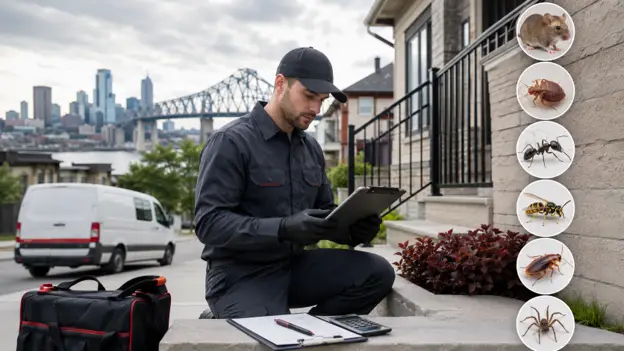
 Cockroaches
 Rats
Rats Mice
Mice Bed Bugs
 Ants
Ants Wasps
Wasps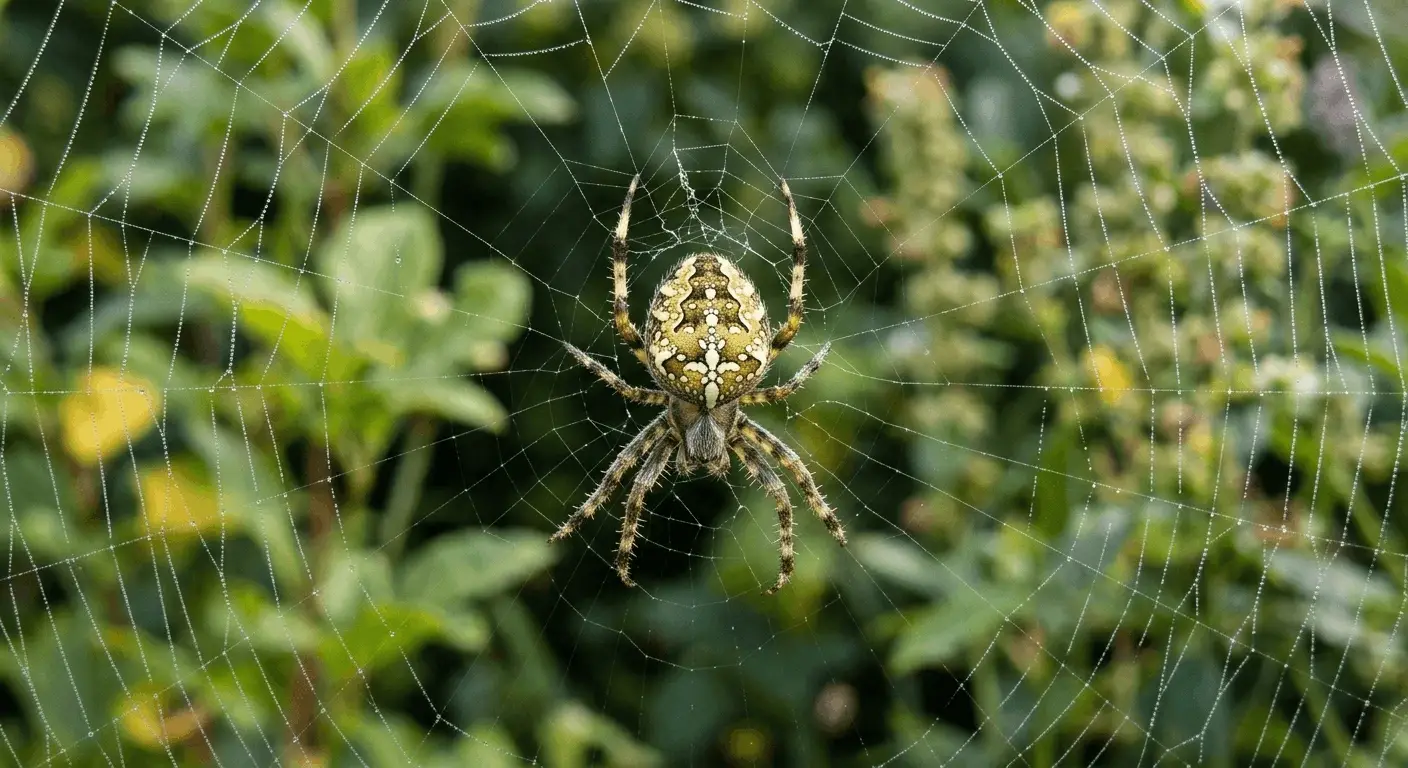 Spiders
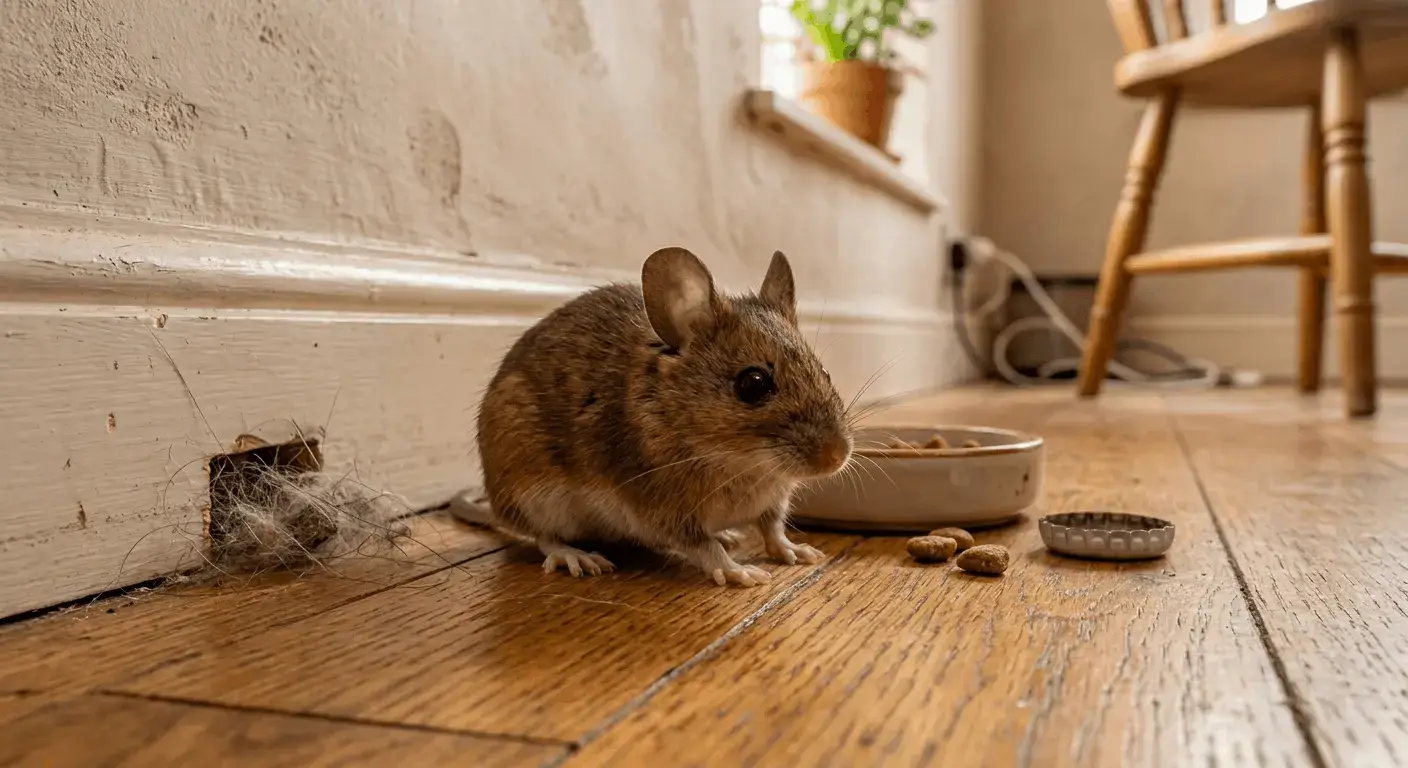 Field Mice
Extermination in a Montreal apartment building: who is responsible, the landlord or the tenant?
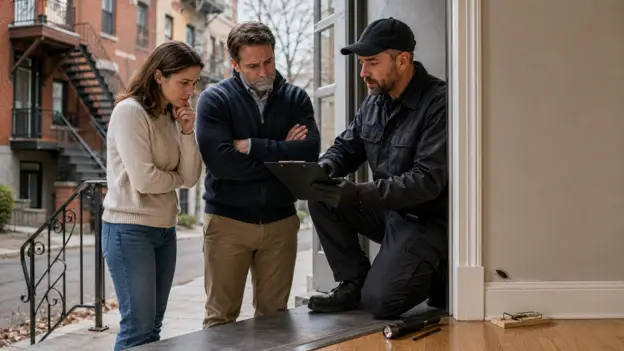
Who pays for extermination in a Montreal apartment building: the landlord or the tenant?
As a general rule, in Montreal as everywhere in Quebec, it is the landlord who must arrange and pay for extermination in an apartment building. This obligation flows from the Civil Code of Québec, which requires the lessor to provide a habitable dwelling and to keep it that way for the entire term of the lease. A vermin infestation is therefore first and foremost the landlord’s responsibility.
There is one exception, however: if the landlord proves that the tenant caused or worsened the infestation, the bill can shift to the tenant. Responsibility is therefore shared, but the default burden falls on the landlord. This guide clarifies each party’s obligations and the remedies available, whether you are a landlord, a property manager or a tenant dealing with bed bugs, mice or other household pests.
An infestation in a rental unit is nothing to be ashamed of: it is a common problem, governed by law, that gets solved with the right reflexes.
The landlord’s obligations (lessor)
The Civil Code of Québec gives the landlord a central role. Their obligations do not stop at collecting the rent: they must guarantee a healthy living environment and step in as soon as an infestation is reported.
Providing and maintaining a habitable dwelling (art. 1910 C.C.Q.)
Under articles 1854 and 1910 of the Civil Code of Québec, the landlord must deliver a dwelling in a good state of habitability and cleanliness, then keep it that way for the whole lease. They must also provide the tenant with peaceable enjoyment of the premises.
An active infestation of bed bugs, cockroaches or rodents directly compromises that habitability and the sanitary condition of the premises, with real risks to the occupants’ health. A landlord who lets the situation deteriorate, or who rents out a unit knowing it is infested, is failing to meet their legal obligations. It is this framework that makes residential extermination unavoidable for any responsible lessor.
Hiring a qualified exterminator quickly
As soon as they are informed, the landlord must act without delay by handing the file to a qualified exterminator. Speed matters: the Tribunal administratif du logement has already ruled that waiting several months before starting treatment was unreasonable. Effective treatment often involves several follow-up visits until the pests are completely eradicated, especially with bed bugs.
Handing the job to a professional is not just a formality. A certified exterminator in Montreal applies products approved by Health Canada and backs up the result in writing. For a landlord, knowing how to choose a qualified exterminator is the best protection against sloppy treatments that let the infestation come back.
Hire a certified 24/7 exterminator in Montreal
A reported infestation will not wait. Our certified exterminators work 24/7 across Greater Montreal, with a written guarantee on the invoice.
Call now: 514-501-2076
Treating the common areas and the adjacent units
In an apartment building, an infestation ignores partition walls. The landlord must allow the exterminator to inspect and treat the common areas as well as the adjacent units, in order to stop the spread from one unit to the next.
This is especially true for cockroaches, which travel from one unit to another through utility chases and baseboards. Mice, rats and other pest insects also move between units through the walls and crawl spaces. Treating a single unit while the neighbouring ones stay infested almost always leads to a quick re-infestation. In a condo building, the syndicate of co-owners may also be called on to coordinate the work in the common areas.
The tenant’s obligations
The tenant is not simply a bystander. The law imposes specific responsibilities on them, and failing to meet them can, in certain cases, shift the bill to their side.
Notifying the landlord promptly, in writing
The tenant’s first obligation is to notify the landlord as soon as they notice an infestation. That notice should be given in writing, ideally through a formal demand letter, keeping proof of receipt. This document will be valuable if the file ends up before the Tribunal administratif du logement.
Giving notice quickly is not just good practice: it is an obligation of good faith. A tenant who waits to report the problem, letting the infestation get worse, could be held liable for the additional damage. The law speaks of a reasonable delay: in practice, the sooner you report it, the better your rights are protected for the entire term of the lease.
Preparing the unit and avoiding over-the-counter pesticides
Once the landlord has been notified, the tenant must cooperate with the treatment. That means preparing their unit according to the exterminator’s instructions, keeping the place clean and free of clutter, and keeping access available during the intervention. Here is what is expected:
- keep the unit clean and free of accumulated belongings,
- inspect second-hand furniture and items before bringing them in,
- follow the exterminator’s preparation instructions to the letter,
- never pick up furniture left out on the street.
One crucial point: do not use over-the-counter pesticides. Montreal’s regional public health department advises against over-the-counter pesticides and recommends calling in a professional: applied incorrectly, these products pose a risk to the occupants’ health, especially children’s.
Who covers the extermination costs?
This is the question that creates the most tension between landlords and tenants. The answer is clear in principle, but it comes with an important nuance you need to understand.
The general rule: the landlord pays
Since the law requires the landlord to provide a habitable dwelling, it is up to them to call the exterminator and cover the costs. The landlord pays: that is the starting point, confirmed consistently by the Tribunal administratif du logement.
This rule applies even when the source of the infestation is unknown, or when it comes from a neighbouring unit or a structural problem in the building. As long as the tenant is not at fault, the financial burden stays with the lessor. Several Tribunal decisions confirm this approach, including the granting of a rent reduction for the period during which the tenant had to live with the infestation.
The exception: the tenant’s fault or negligence
The bill can switch sides if the landlord shows that the tenant is the source of the problem. A few examples recognized by the courts:
- bringing an already infested piece of furniture or mattress into the unit,
- creating unsanitary conditions that encourage infestation (uncleanliness, extreme clutter),
- failing to notify the landlord, letting the situation get worse.
In those cases, an administrative judge can hold the tenant liable for the costs. The burden of proof, however, falls on the landlord, and each situation is assessed on its own facts. That is why documenting the condition of the unit at move-in, with photos and a written inspection, protects the tenant just as much as the landlord in the event of a dispute.
Is the landlord slow to act? The tenant’s remedies
When a lessor stays inactive despite a clear notice, the tenant is not without recourse. Quebec law sets out a specific path to follow, from a simple notice all the way to an application to the Tribunal administratif du logement.
Evidence, formal demand letter and application to the Tribunal administratif du logement
Faced with an inactive landlord, here are the recommended steps:
- Gather evidence: photos, videos and dated notes showing the presence of pests and how the problem is developing.
- Limit the infestation as much as possible by keeping the unit clean, without attempting any chemical treatment yourself.
- Notify the landlord in writing, by means of a formal demand letter setting a reasonable deadline to act.
- Apply to the Tribunal administratif du logement if the problem persists.
The Tribunal can then order the landlord to carry out the work, award damages, reduce the rent for the loss of enjoyment, or even cancel the lease if the dwelling is unfit for habitation. In an emergency, a tenant who first tried to inform their landlord can bring in an exterminator themselves and claim reimbursement of the reasonable expenses incurred.
How serious the situation is shapes the remedies. A distinction is made between a dwelling in a poor state of habitability, inconvenient but with no immediate danger, and a dwelling unfit for habitation, which poses a serious threat to health or safety.
In the case of a dwelling unfit for habitation, the tenant can leave the premises and stop paying rent, provided they give the required notices. The Tribunal administratif du logement, formerly the Régie du logement, settles these disputes for residential leases under $70,000.
Confirm the infestation with a professional inspection
Our thermal camera locates hidden nests inside the walls and documents the scale of the problem. A clear inspection report supports the landlord and the tenant alike.
Acting fast protects the whole building
Beyond the legal obligations, speed is in everyone’s interest. An infestation treated at the first signs costs less, is eradicated faster and avoids spreading to the neighbours. Waiting, on the other hand, turns a localized problem into a collective nightmare. Prevention helps too: regular inspections, waste management and vigilance about second-hand items reduce the risk. If a landlord stays inactive, a tenant can also report an unsanitary dwelling to their municipality’s inspector.
The best way to avoid a dispute before the Tribunal is to deal with the infestation before it spreads.
Treatment that meets your obligations, for landlords and property managers
For a landlord or a building manager, entrusting commercial extermination and property management to a certified company is the simplest way to meet their legal obligations. You get treatment of the common areas and the affected units, a written guarantee and follow-up until complete eradication.
This compliance protects your liability, reassures your tenants and preserves the value of your building in Montreal. A well-documented file, with invoice and guarantee, is also your best defence in the event of a disagreement. For managers with several buildings, a preventive control contract limits recurring infestations and tenant complaints.
This article provides general information on Quebec rental law and does not constitute legal advice. For a specific situation, consult a legal professional or the Tribunal administratif du logement.
Request a free quote
No hidden fees, no commitment. Get a clear picture of the treatment, the price and the guarantee before any work begins.
Certified exterminators in Montreal for over 30 years. Written warranty on the invoice, thermal camera included, Health Canada-approved products.