 Cockroaches
 Rats
Rats Mice
Mice Bed Bugs
 Ants
Ants Wasps
Wasps Spiders
 Field Mice
Rats: the nightmare of Montreal restaurants (solutions)
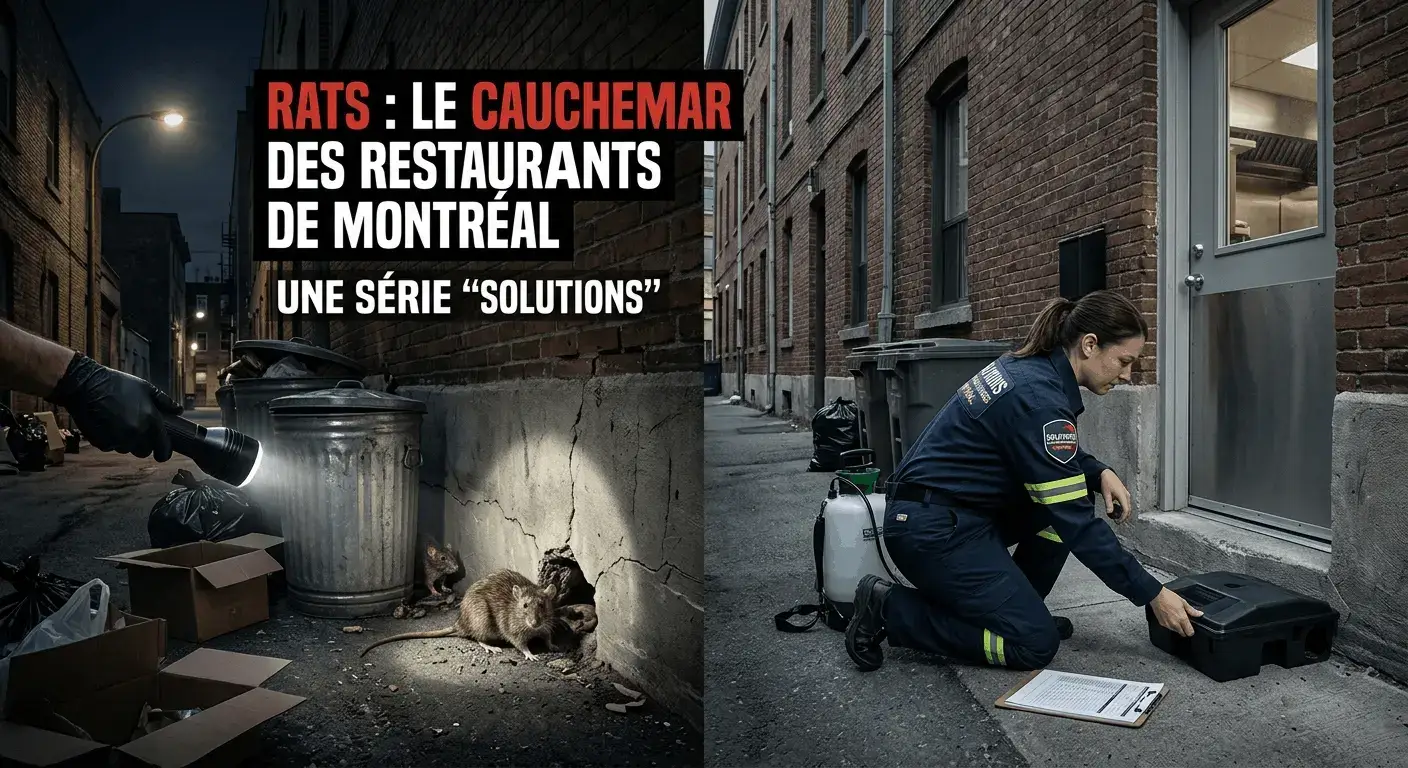
The Montreal restaurant industry is facing a major challenge that threatens to ruin years of hard work in just a few days. With construction sites multiplying and infrastructure aging, rats in restaurants in Montreal are invading commercial kitchens at an alarming rate. Calling in a Rat Exterminator in Montreal has become an absolute necessity for many owners who want to protect their establishment.
Recent data from the City of Montreal confirms this worrying trend. In 2024, more than 1,700 calls were logged with 311 to report the presence of rats. Inspectors from Quebec’s Ministère de l’Agriculture, des Pêcheries et de l’Alimentation (MAPAQ) are cracking down hard, handing out steep fines that can exceed $5,000 for sanitation-related violations.
This practical guide is aimed directly at restaurateurs and food establishment managers. You will learn about the causes of this proliferation, the critical risks to your business, as well as proven strategies to detect and effectively prevent the presence of rodents in your kitchens.
Why Montreal restaurants are prime targets for rats
Montreal offers an urban environment that is particularly favourable to the growth of rodent colonies. Restaurants, by their very nature, provide rats with the three elements essential to their survival: abundant food, water and heated shelter.
The city’s historic architecture plays a major role in this dynamic. Old buildings, cracked foundations and a century-old sewer network offer countless points of entry. Dense neighbourhoods such as Plateau-Mont-Royal, Rosemont and Hochelaga-Maisonneuve concentrate a large number of food businesses on the ground floor of century-old buildings. Rats take advantage of these porous structures to move easily between residential units and commercial food supplies.
Roadwork and major construction projects make the problem worse. Excavations destroy underground nests, forcing rat colonies to flee to the surface and make their way into surrounding buildings. Overflowing commercial garbage bins and cluttered alleyways end up tracing a direct path to your kitchen.
The dangers linked to the presence of rats
An infestation is not just an unpleasant sight. It represents an overall threat to the long-term survival of a food establishment.
Health risks
Rats are significant vectors of serious diseases. They can transmit salmonellosis, leptospirosis and E. coli bacteria. A single rodent can contaminate dozens of kilos of food through direct contact, its urine or its droppings. The hair and parasites carried by these animals (such as fleas) seriously compromise the food safety of your customers and your staff.
Financial impact
The cost of a full-blown infestation climbs quickly. You will first have to throw out all potentially contaminated goods, resulting in significant inventory losses. Rats also damage infrastructure by gnawing through electrical wires, increasing the risk of outages or fires. Finally, if a MAPAQ inspector finds pests on your premises, your establishment risks heavy fines, or even an emergency closure until the problem is completely resolved.
Damage to your reputation
A customer who sees a rat cross the dining room or who discovers rodent traces will never come back. Worse still, they will share their experience on social media. One compromising photo posted online can instantly destroy a reputation built over many years, leading to a drastic drop in traffic.
How to spot rats in restaurants in Montreal
Rats are nocturnal and discreet creatures. When an employee sees a rat in broad daylight, the infestation is often already severe. You need to train your team to recognize the early warning signs:
- Droppings: Small dark pellets about the size of an olive pit, often found under sinks, near refrigerator compressors or in dry storage areas.
- Gnaw marks: Punctured food packaging, damaged baseboards or stripped electrical cables. Rats have to gnaw constantly to file down their teeth.
- Night-time noises: Scratching or scurrying sounds coming from drop ceilings, walls or ventilation ducts.
- Grease marks: Rats leave dark smudges along walls and baseboards because of the sebum in their fur, since they often follow the same routes.
- Persistent odours: A strong, acrid smell of ammonia, typical of rodent urine, that is particularly pronounced in confined spaces.
Proactive prevention strategies for restaurateurs
The best approach to managing rodents is to stop them from getting in. Here are effective preventive methods to build into your daily operations.
Hygiene best practices
End-of-service cleaning must be thorough. Floors should be swept and washed to remove the crumbs and grease residue that build up under cooking equipment. Waste management calls for particular attention: use bins fitted with airtight lids and empty them regularly. Make sure the outdoor container area stays clean and clear of any organic debris.
Building maintenance
Inspect the outside and the inside of your building regularly. A rat can slip through an opening the size of a quarter. Seal cracks in the foundation with rodent-resistant materials such as wire mesh or cement. Install sturdy weatherstripping at the bottom of delivery doors and block off the gaps around pipes.
Storage solutions
Forget paper bags and cardboard boxes for long-term storage. Transfer flour, sugar, cereals and other dry goods into airtight containers made of thick plastic, glass or metal. Storage shelves should sit at least 15 centimetres off the floor and away from the walls to make inspection and cleaning easier. Apply strict stock rotation (first in, first out).
The crucial role of pest management experts
Even with the best hygiene practices, the geographic location of some restaurants makes them extremely vulnerable. Bringing in qualified experts then becomes unavoidable.
When to call in the professionals
Do not wait until customers complain. As soon as you find the first droppings or a gnawed package, contact an exterminator. Rodents reproduce at lightning speed. A single female can give birth to several dozen young in a matter of months. Early intervention limits material damage and protects your inventory.
What to expect from a professional service
Modern exterminators no longer rely on simple traps alone. A specialized company will carry out a complete inspection of the premises, including drop ceilings and basements. The use of technological tools, such as thermal camera inspection, makes it possible to detect nests hidden behind walls without having to tear everything down. The expert will then draw up a targeted treatment plan and install secure bait stations that comply with Health Canada standards, in order to eliminate the colony safely.
Choosing the right exterminator
Give preference to a company with solid commercial experience that holds the appropriate certifications. The ideal provider will offer discreet interventions (often outside business hours), 24-hour emergency service, and a monthly follow-up program to guarantee that the problem does not come back.
Case studies: lessons from recent inspections
Last year, a very popular bakery in a central neighbourhood was hit with a shock administrative closure. MAPAQ found rodent droppings directly on the work surfaces and bags of flour that had been torn open. The establishment, tucked into a century-old building next to sewer work, had ignored the first signs of infestation. The total cost of the incident (fines, large-scale extermination, professional cleaning and lost revenue during the closure) exceeded $15,000.
Conversely, a large restaurant in Old Montreal avoided the worst by hiring a professional exterminator as a preventive measure. Thanks to visits every two months and structural recommendations (such as caulking the ventilation ducts), the establishment never failed a MAPAQ inspection, proving that being proactive is a profitable investment.
Protect your establishment’s culinary excellence
Running a restaurant in Montreal involves many challenges, but the presence of pests should not be one of the ones you tolerate. Rats jeopardize the health of your customers, the finances of your business and the image of your brand. By applying strict sanitation rules, maintaining your building and working with pest management experts, you guarantee a healthy and safe environment. Take the lead today and make sure the only critics who visit your establishment are the food critics.
Certified exterminators in Montreal for over 30 years. Written warranty on the invoice, thermal camera included, Health Canada-approved products.